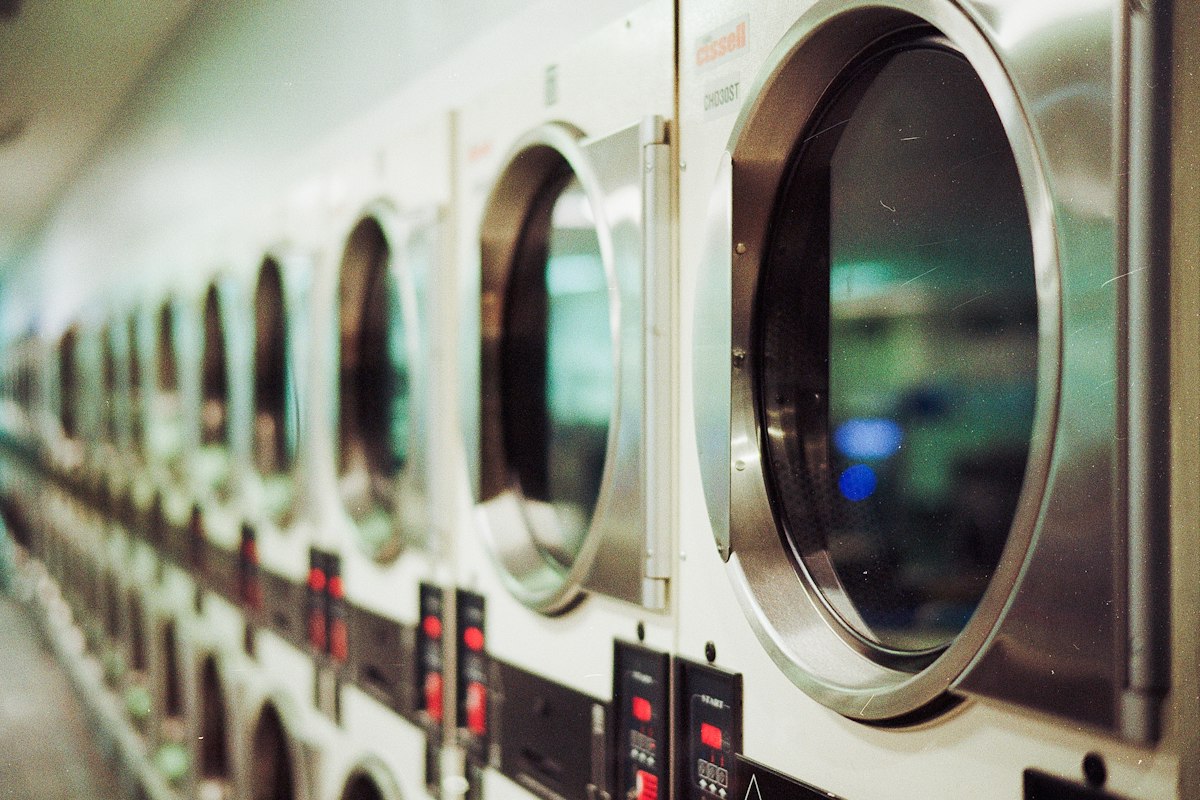
You switched to eco products — but the routine still matters
Most people focus entirely on what product they put in the machine, not how they use the machine. The truth is that an eco detergent used badly does less good than a conventional detergent used well. And eco laundry done right can save a typical household $150–270 per year — see our full eco laundry cost breakdown for the numbers.
Here are the 7 mistakes we see most often, and the simple fixes.
Mistake 1: Washing in warm water when you don't need to
This is the biggest single mistake in home laundry. Heating water accounts for approximately 90% of washing machine energy use. Switching from 40°C to 20°C saves $40–80/year on energy alone — and modern eco detergents work equally well at cold. Our cold water washing guide has the full data and tells you exactly which loads still need heat (very few).
The fix: Set your machine's default temperature to 20°C or 'Cold' today. Keep warm available for genuinely heavy-soil loads only.
Mistake 2: Overdosing eco detergent
Research consistently shows the majority of people use 2–3 times the required amount of detergent. This doesn't clean better — it leaves residue on fabric, creates excess suds in HE machines, and costs you money for no benefit. Eco detergents are concentrated, making overdosing even more wasteful.
The fix: For lightly soiled everyday loads in a modern machine, use half the label dose. For heavily soiled loads or hard water areas, use the full recommended amount. If you're using laundry strips or pods, use one strip per normal load — not two.
Mistake 3: Ignoring the dryer
The dryer uses more energy than the washer — a standard electric dryer runs at 3.5–5 kWh per cycle vs 0.3–0.5 kWh for a cold wash. If you switched to eco detergent but kept all your old dryer habits, you've addressed maybe 15% of your laundry's energy impact and left 85% untouched.
The fix: Swap dryer sheets for wool dryer balls (see our dryer balls comparison) — manufacturers claim they can cut drying time by up to about 25%. Air dry items that dry easily (t-shirts, underwear, jeans). Reserve the dryer for towels and items that need it.
Mistake 4: Not adjusting for hard water
Eco detergents — especially powders — perform differently in hard vs soft water. Hard water (high calcium and magnesium mineral content) reduces surfactant effectiveness, which means clothes may not come out as clean even when you've dosed correctly. Many people in hard water areas either over-dose (waste) or assume eco detergent doesn't work (wrong conclusion).
The fix: Check your water hardness (most local water providers publish this). In hard water areas, use the full label dose and add a water softener sachet (sodium citrate or washing soda crystals) to the drum. This is cheaper and more eco-friendly than over-dosing detergent.
Mistake 5: Not addressing synthetic microfibre shedding
Polyester, nylon, and acrylic fabrics shed plastic microfibres every wash — up to 700,000 per cycle according to Plymouth University research. These pass through wastewater treatment and accumulate in marine environments. If you've switched to eco detergent but you wash synthetic sportswear or fleeces, microfibres are your laundry's biggest unaddressed environmental impact.
The fix: Use a Guppyfriend washing bag for synthetic loads — it captures approximately 54% of released microfibres. Wash synthetics on short, gentle cycles in cold water, which also reduces shedding. Inside-out washing reduces surface abrasion and fibre loss.
Mistake 6: Running half-loads
A half-load uses roughly 65–70% of the energy and water of a full load. Running two half-loads instead of one full load doubles your wash cycles, energy consumption, and detergent use. This one habit can add $60–120/year in unnecessary cost.
The fix: Wait for a full load. If you need something specific urgently, hand-wash that item rather than running the machine half-full. Most washing machines have a half-load setting that reduces water intake — use it if you must run a smaller load.
Mistake 7: Keeping conventional dryer sheets alongside eco detergent
Dryer sheets are a common leftover from before the eco switch. They deposit fragrance chemicals and fabric-coating compounds directly onto fabric where they stay against your skin all day. If you've switched to an eco detergent for sensitive skin but kept dryer sheets, the dryer sheets are still the main irritant for reactive skin.
They also coat the dryer lint filter and drum interior, reducing dryer efficiency over time. And they're single-use plastic-coated waste.
The fix: Complete the switch. Wool dryer balls soften fabric by mechanical action, reduce static, cut dry time, and have no ingredients. A 6-pack costs $15–25 and lasts 1,000+ cycles — effectively permanent vs dryer sheets at $0.10–0.25 per use.
The compound effect of fixing all 7
Each fix on its own saves $15–80 per year. Fixed together, a typical household moves from $500+/year in laundry costs to around $250–300 — a saving of $200+ annually, plus a dramatic reduction in plastic waste, chemical load, and CO2 emissions.
For a comprehensive view of what a complete eco laundry routine looks like and costs, see our full eco laundry cost breakdown. For stain challenges along the way, our natural stain removal guide covers 12 common stains without chemicals. And if you're still choosing between laundry strip brands, our Tru Earth vs Dropps comparison and 10 laundry swaps that actually work complete the picture.


Reviews & Comments
Loading...