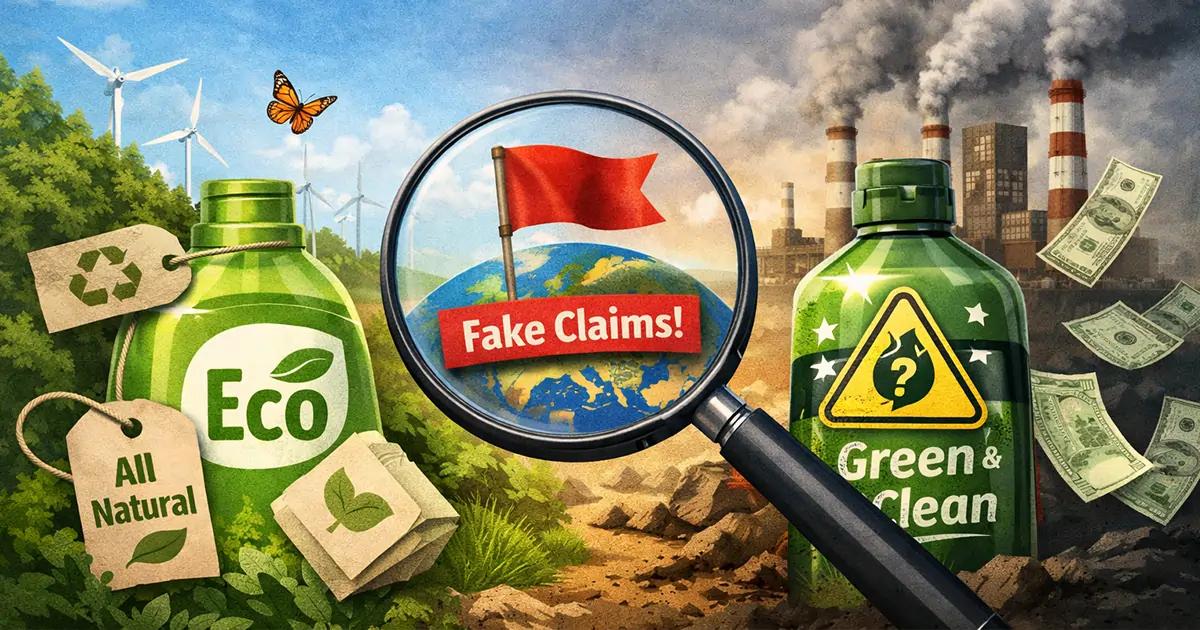
Greenwashing Red Flags: How to Spot Fake Eco Products
Walk through any supermarket cleaning aisle and you'll see a wave of green leaves, earthy colours, and words like natural, clean, and planet friendly.
But many of those products aren't actually much better for the environment.
This marketing tactic is called greenwashing — when companies exaggerate or misrepresent environmental claims to make products appear more sustainable than they really are.
The problem isn't just misleading marketing. Greenwashing makes it harder for shoppers to identify brands that genuinely invest in sustainable ingredients, ethical sourcing, and responsible packaging.
This guide explains the most common greenwashing red flags, how to verify eco claims, and what details experienced eco shoppers look for before trusting a product.
If you want to avoid fake eco products and make smarter purchasing decisions, these warning signs are worth learning.
What Is Seventh Generation Free & Clear?
Seventh Generation has built its brand around environmental transparency since the late 1980s. The company was founded in Vermont and focuses on plant-based household cleaning products designed to reduce chemical exposure and environmental impact.
Their Free & Clear Laundry Detergent is one of the brand’s best-known products.
Instead of synthetic fragrance blends and brightening dyes, the formula uses plant-derived surfactants to lift stains and oils from fabrics. The detergent is USDA Certified Biobased, which means a significant percentage of the formula is derived from renewable plant materials rather than petroleum-based chemicals.
Another detail experienced eco shoppers notice is ingredient disclosure.
Seventh Generation publishes a full ingredient list online, including surfactants like lauryl glucoside and sodium coco-sulfate, along with enzymes used for stain removal. Many conventional detergents hide these behind vague labels like “cleaning agents.”
Packaging still uses plastic bottles, which is a common limitation across the detergent industry. However, the bottles contain post-consumer recycled plastic and are widely recyclable.
What Is Method Laundry Detergent?
Method is another well-known brand in the eco-cleaning space, recognizable for its colourful bottles and modern product design.
The company was founded in San Francisco and built its reputation around plant-based cleaning formulas paired with distinctive packaging aesthetics.
Their Fresh Air Laundry Detergent uses biodegradable surfactants derived from plant oils. The formula is designed to work in high-efficiency machines and cold-water cycles, which can reduce household energy usage.
Method often highlights fragrance innovation, offering scents like ginger mango or beach sage. These scents come from fragrance blends rather than essential oils alone, which sometimes raises questions among ingredient-conscious shoppers.
Unlike some eco brands, Method does not always provide the same level of detailed ingredient transparency as Seventh Generation. Ingredients are disclosed, but explanations of surfactant sources and concentrations are less detailed.
Key Differences: Seventh Generation vs Method
Cleaning Performance
Both detergents handle everyday laundry tasks well.
Seventh Generation’s enzyme blend tends to perform slightly better on organic stains like food, sweat, and grass.
Method’s detergent cleans effectively but sometimes struggles with heavy stains unless the load is pre-treated.
Eco Credentials
Seventh Generation emphasizes third-party certifications like USDA Biobased.
Method focuses more on biodegradable ingredients and renewable-energy manufacturing.
Which Is More Eco-Friendly?
When comparing environmental credibility, transparency is often the deciding factor.
Seventh Generation openly publishes ingredients and backs sustainability claims with third-party certifications like USDA Biobased.
Method’s formulas use plant-based ingredients and renewable-energy manufacturing, which are positive steps.
Final Verdict
Greenwashing makes eco shopping confusing, but a few simple checks reveal a lot about a product.
Look for third-party certifications, transparent ingredient lists, and realistic sustainability claims.
Between the two detergents in this comparison, Seventh Generation offers stronger transparency and certification-backed claims, making it the more trustworthy eco option.