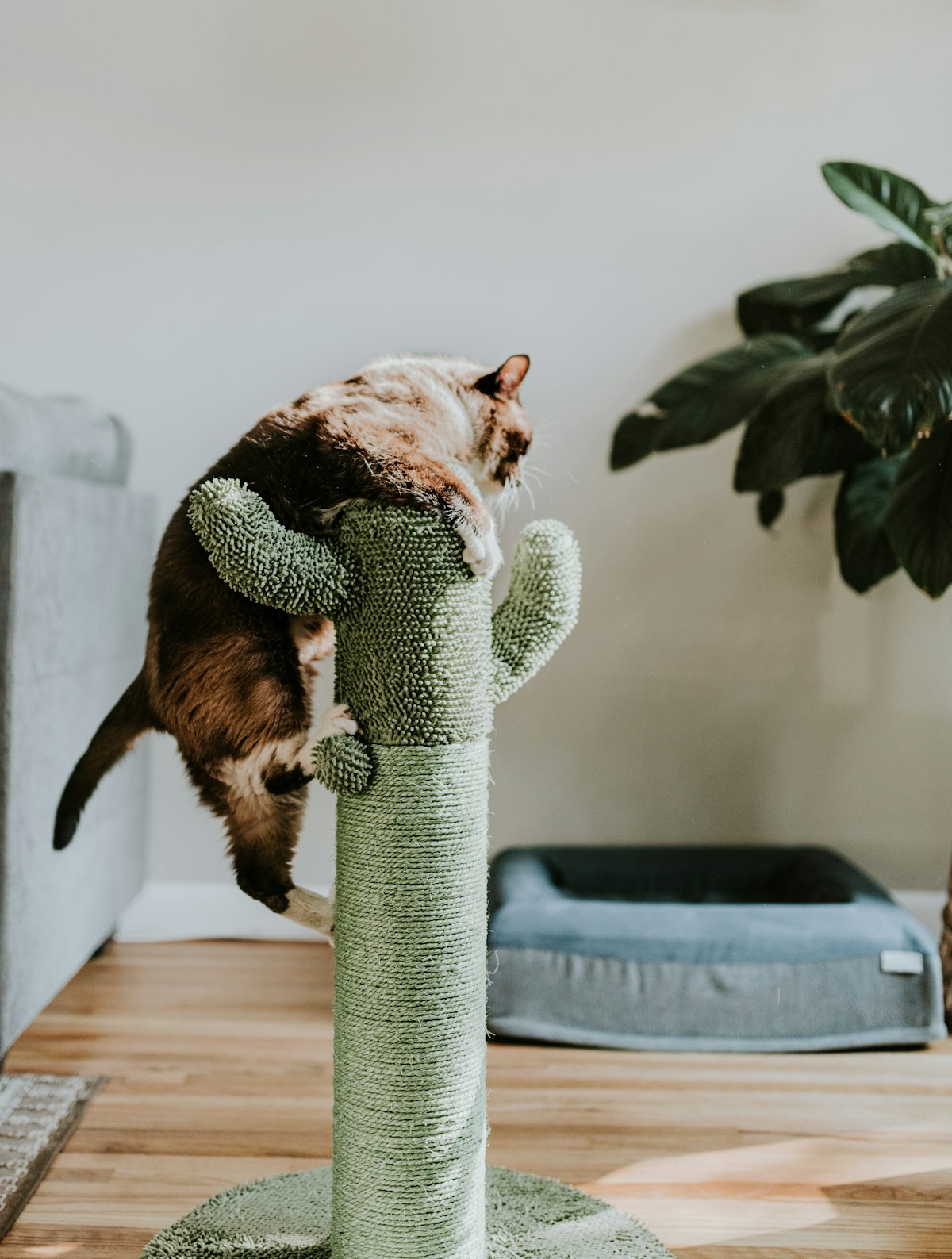
Sisal-wrapped cat trees get positioned as the eco-friendly premium option, but the more practical question for most cat owners is simpler: will the cat actually use it, or will $150 of cat tree get ignored in favor of the couch arm?
What Scratching Behavior Is Actually About
Scratching serves claw maintenance (removing the outer sheath of the claw) and territorial marking (both visual and scent, via glands in the paw). Neither function is well served by a soft surface — cats generally seek out surfaces with real resistance and texture, which is part of why furniture arms, wood, and coarse woven materials get targeted more than soft carpet.
Why Carpet-Covered Posts Get Ignored So Often
A common complaint with carpet-covered scratching posts is that cats ignore them entirely, preferring actual carpet or furniture instead. Part of the explanation is texture similarity — carpet on a post doesn't feel meaningfully different from carpet on the floor or furniture upholstery, so it doesn't stand out as a distinctly better option. Sisal's coarse, ropelike texture is a clearly different sensory experience, which seems to make it a more distinct, appealing target.
Durability Adds a Second, Practical Reason to Prefer Sisal
Beyond preference, sisal holds up to repeated scratching considerably longer than carpet. Carpet mats down and develops loose loops under sustained scratching, which isn't just an aesthetic problem — loose carpet loops can snag a cat's claw during a scratch, a real minor safety issue that a well-maintained sisal surface doesn't develop in the same way.
Verdict
Sisal (or jute) cat trees aren't just the sustainable choice — they're also more likely to actually get used, and they hold up longer to repeated scratching than carpet. If a carpet-covered cat tree at home is being ignored, a sisal-wrapped one is a reasonable next thing to try before assuming the cat simply doesn't want a scratching post at all.
Our pick for this: Sisal & Wood Cat Tree →


Reviews & Comments
Loading...