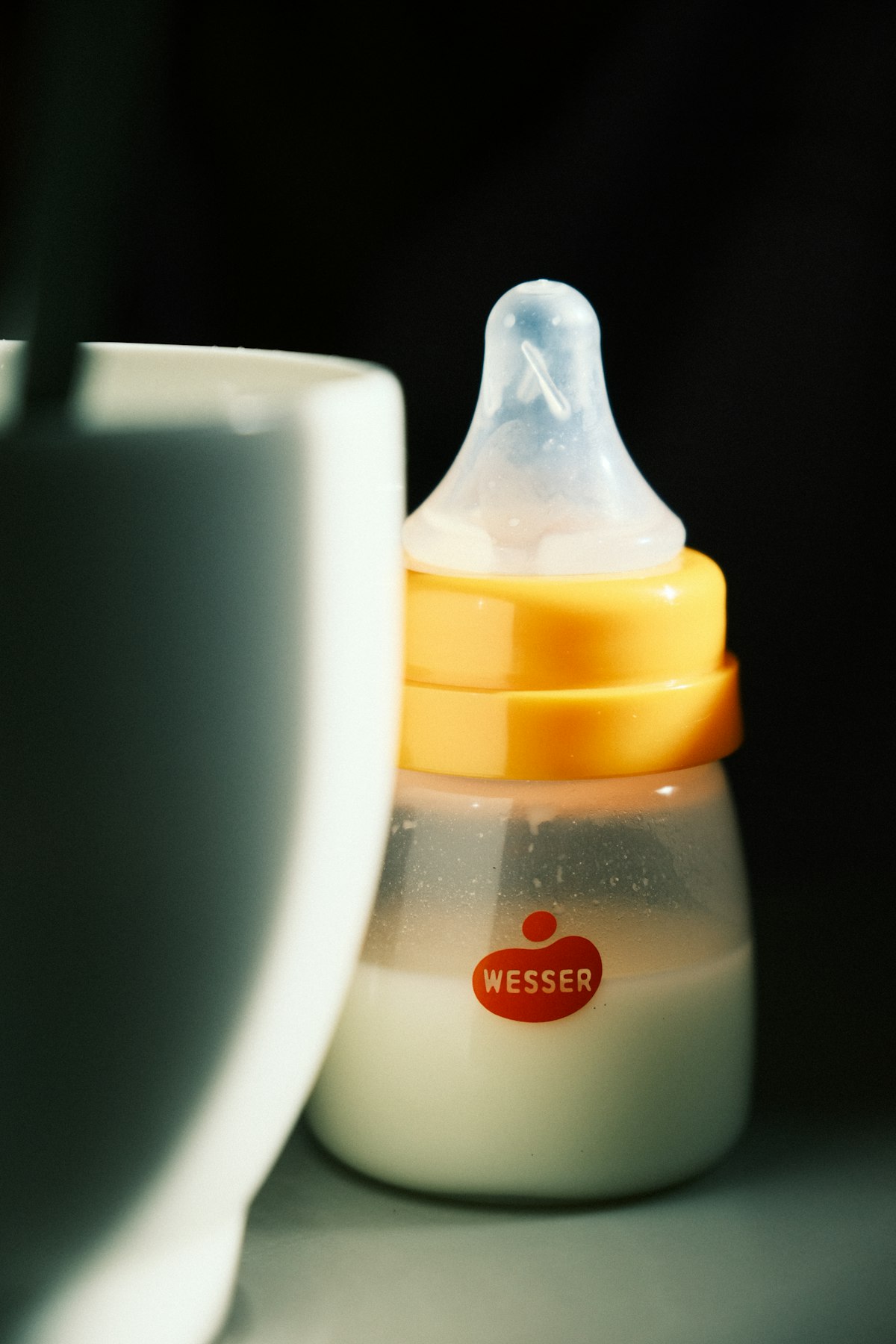
"BPA-free" has functioned as a kind of all-purpose safety signal on baby products for well over a decade now. It's worth actually unpacking what that label does and doesn't guarantee, because the honest answer is less reassuring than the ubiquity of the label suggests.
What "BPA-Free" Actually Guarantees
Strictly, it means the product doesn't contain bisphenol A specifically. That's the entire scope of the claim — it says nothing about what was used instead, and manufacturers replacing BPA had to use something to maintain the plastic's properties.
What Usually Replaced It
Bisphenol S (BPS) and bisphenol F (BPF) are common substitutes, chosen largely because they're structurally similar to BPA and provide comparable plastic performance. That structural similarity is exactly the problem: research has found that BPS, BPB, and BPF possess acute toxicity, genotoxicity, and estrogenic activity similar to BPA. One study on zebrafish even found BPS caused a larger neuronal growth effect than BPA did, suggesting the replacement may not be a straightforward downgrade in risk, and could in some measured respects be worse.
Why This Isn't Disclosed More Clearly
There's no law forcing companies that removed BPA to specify what they replaced it with. Most brands self-declare "BPA-free" and stop there — the label technically true, but silent on the substitution that actually matters for anyone trying to evaluate real chemical exposure risk. Very few manufacturers voluntarily extend the same "-free" framing to BPS or BPF, even when using them.
It Gets Messier: BPA Itself Sometimes Shows Up Anyway
Testing by European consumer groups has detected BPA in several pacifier brands specifically labeled "BPA-free," with some samples exceeding EU migration safety limits — meaning the label isn't even a fully reliable guarantee of the one thing it explicitly claims, let alone the broader chemical exposure question.
What This Actually Means for Shopping
"BPA-free" isn't meaningless, but it's a much narrower claim than it functions as in practice. For products with sustained mouth contact — pacifiers, teethers, bottles — materials that avoid the entire bisphenol category by design (genuine food-grade silicone, untreated wood, stainless steel) sidestep this substitution problem entirely, rather than relying on a label that only rules out one specific compound in a family of chemically similar ones.


Reviews & Comments
Loading...