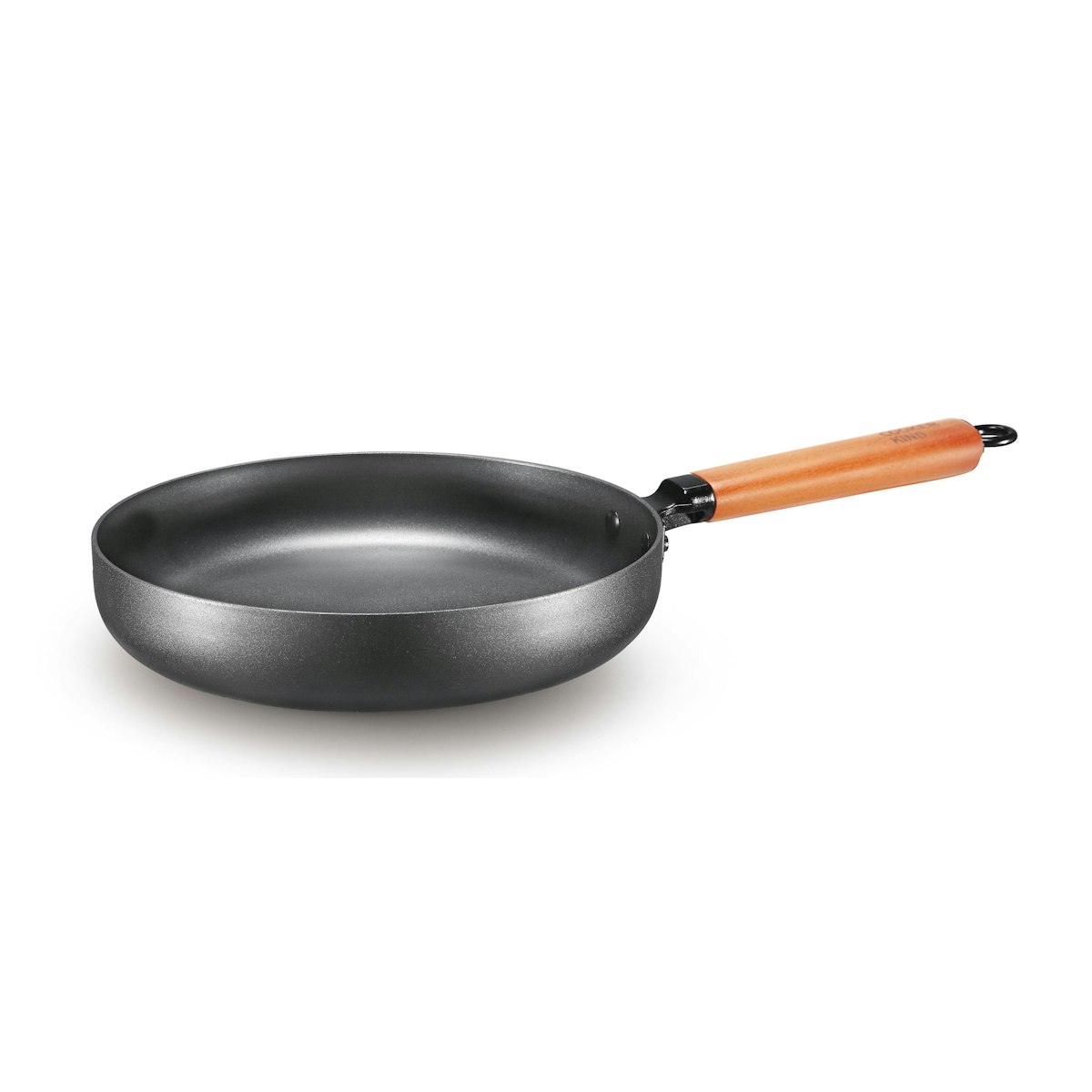
TL;DR: Caraway is the better pick if you want PFAS-free ceramic cookware that looks good and stores neatly, GreenPan gets you the same PTFE/PFOA-free ceramic non-stick technology for meaningfully less money, and cast iron beats both on sheer lifespan if you don't mind seasoning it.
Why People Are Moving Away From Traditional Non-Stick
Most "non-stick" pans sold for the last several decades use PTFE, better known by the brand name Teflon. The health scare that pushed shoppers toward ceramic wasn't really about PTFE itself — it was about PFOA, a "forever chemical" once used to manufacture PTFE coatings, which was linked to health and environmental concerns and voluntarily phased out by major cookware makers under an EPA stewardship program completed around 2015. Modern PTFE pans sold today are PFOA-free. That said, PTFE is still a fluoropolymer, it still shouldn't be heated past roughly 500°F (empty pans left on high heat are the real risk, especially around pet birds), and a lot of shoppers have simply decided they'd rather avoid fluorinated coatings altogether. That's the gap Caraway and GreenPan are both built to fill: mineral-based ceramic (sol-gel) coatings that contain no PTFE, PFOA, lead, or cadmium by design.
Caraway: Ceramic Built Around Design and Storage
Caraway is the newer, design-first brand — recognizable from Instagram ads before most people ever touched one. The ceramic non-stick coating is PTFE- and PFOA-free, and the brand differentiates less on the coating chemistry (which is broadly similar in category to other ceramic cookware) and more on the whole-kitchen system: color-matched pan sets, a magnetic pan rack, canvas lid slings, and pantry storage designed to look intentional rather than shoved in a cabinet. That's a real, non-trivial selling point for small kitchens. The tradeoff is price — Caraway sits at the premium end of ceramic cookware, and you're paying for the aesthetic and storage system as much as the pan itself.
GreenPan: The Original Ceramic Non-Stick, for Less
GreenPan has a genuine claim to history here: it's generally credited with commercializing Thermolon, the ceramic sol-gel coating that kicked off the mainstream ceramic non-stick category back in the mid-2000s, years before Caraway existed. GreenPan now sells across a much wider range of product lines and price points — some with reinforced or diamond-infused coatings pitched as more scratch-resistant — and it's distributed through mass retail (Target, Amazon, Williams Sonoma) rather than a boutique DTC storefront. Functionally, a mid-range GreenPan pan and a Caraway pan perform very similarly on release and heat behavior. The real difference buyers feel is price: GreenPan routinely costs meaningfully less for a comparable set, without the matching storage accessories.
Cast Iron: The Durability Benchmark
Neither ceramic brand touches cast iron on longevity. A well-seasoned cast iron skillet has no coating to wear off — its non-stick surface is a layer of polymerized oil baked into the porous iron, and it can be re-seasoned indefinitely. Cast iron pans genuinely get passed down as heirlooms; a $25 Lodge skillet bought today can outlast every ceramic pan you'll ever own. It's also the cheapest option here by far. The costs are real, though: cast iron is heavy, needs to be dried immediately and lightly oiled to prevent rust, doesn't love acidic, long-simmered sauces until it's well-seasoned, and heats less evenly than a clad or ceramic-coated pan straight out of the box.
Caraway vs GreenPan vs Cast Iron: Side-by-Side
| Attribute | Caraway | GreenPan | Cast Iron |
|---|---|---|---|
| Coating | PTFE/PFOA-free ceramic | PTFE/PFOA-free ceramic (Thermolon) | None — seasoned oil layer |
| Typical price (per pan) | Premium | Mid-range, often less than Caraway | Budget |
| Non-stick lifespan | Degrades gradually with heavy use | Degrades gradually with heavy use | Improves with use if maintained |
| Maintenance | Low — hand wash, no metal utensils | Low — hand wash, no metal utensils | Higher — dry, oil, occasional re-season |
| Design/storage system | Color-matched sets, magnetic rack, lid slings | Standard cookware, wider style range | None — utilitarian |
The Honest Tradeoff: Ceramic Coatings Wear Out
This is true of Caraway, GreenPan, and every other ceramic non-stick pan on the market, and it's worth saying plainly: ceramic sol-gel coatings generally lose their slick, food-release performance faster than PTFE does with regular use, especially under high heat, with metal utensils, or in the dishwasher. Cookware reviewers have documented this repeatedly — a ceramic pan that releases eggs perfectly on day one often needs a splash of oil to do the same job after a year or two of daily cooking. Neither Caraway nor GreenPan has solved this; it's a property of the coating chemistry itself, not a manufacturing flaw specific to either brand. If flawless release for a decade-plus is the goal, cast iron (or well-maintained stainless) will get you there in a way ceramic won't.
Price-to-Performance
If budget is the deciding factor, GreenPan gets you the same category of PFAS-free ceramic cooking performance as Caraway for less money, and its wider line means you can buy exactly the pieces you need instead of a matched set. Caraway's premium buys you a genuinely nicer-looking kitchen and a storage system that solves a real problem in small apartments, but it doesn't buy you a coating that outlasts GreenPan's. Cast iron, meanwhile, is the only option here that gets more valuable — not less — the longer you own it.
Our Verdict
For most people replacing an old scratched-up Teflon pan and wanting the least hassle, GreenPan is the more defensible buy — same PFAS-free ceramic tech, lower price, wider range. Choose Caraway if the color-matched design and storage system genuinely solve a kitchen-space problem for you and the price premium doesn't sting. And if you're willing to learn to season and maintain a pan, a $25–40 cast iron skillet will outlast both ceramic brands combined — it's the honest long-game pick, just not the easiest one.


Reviews & Comments
Loading...