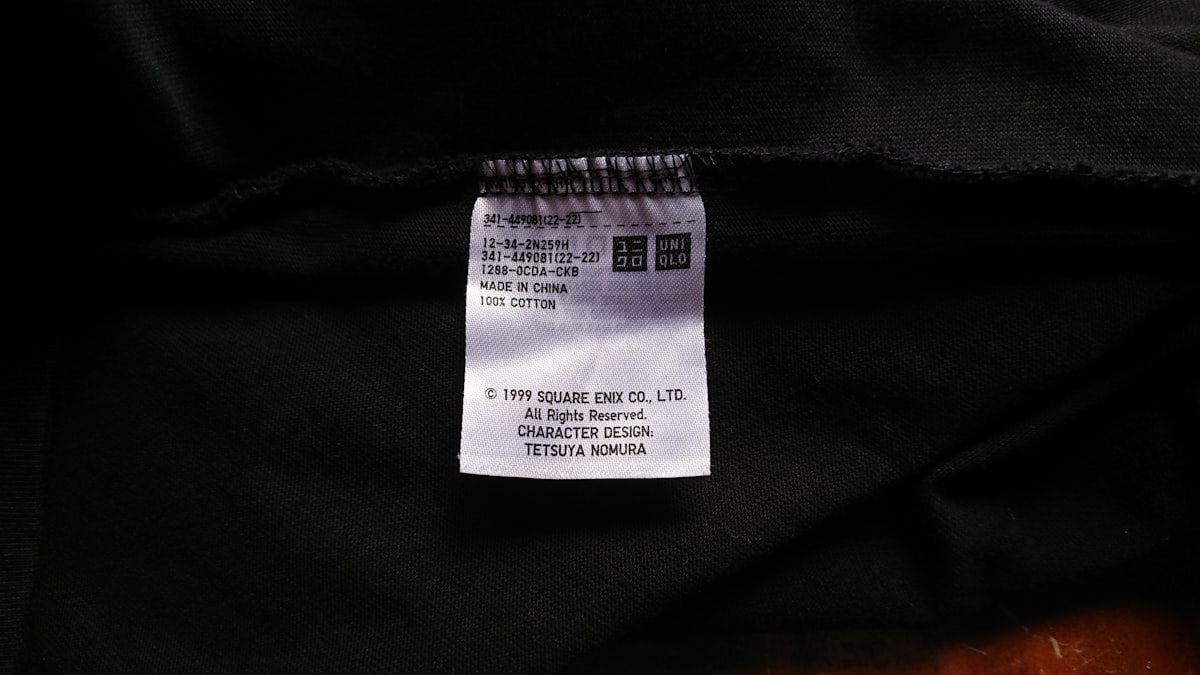
TL;DR: Care labels use five symbol families — washing (tub), bleaching (triangle), drying (square), ironing (iron), and professional cleaning (circle) — and getting temperature right, more than any other single factor, determines whether elastane, dyes, and natural fibers survive years of washing or degrade within months.
Why Care Labels Exist — and Why Ignoring Them Costs You
In the US, permanent care labels aren't a courtesy — they're required by the FTC's Care Labeling Rule (16 CFR Part 423), which mandates that most garments carry instructions for regular care covering washing, bleaching, drying, and ironing. The symbols themselves follow a standardized system (ASTM D5489 in the US; the international GINETEX/ISO 3758 system is similar and used across the EU), which is why a care label on a shirt made anywhere in the world uses roughly the same icons.
The reason this matters for garment lifespan comes down to material science, not superstition. Heat breaks down the polymer chains in elastane (spandex), which is why over-dried leggings and underwear lose their stretch permanently and don't recover. Hot water and agitation cause the microscopic scales on wool and other animal fibers to interlock and shrink — the felting process is irreversible once it happens. High heat in a dryer causes more mechanical abrasion between fibers than air drying, which is a real, measurable contributor to pilling. None of these are marketing claims; they're the same reasons textile care labs test fabric this way in the first place.
The Five Symbol Families, Decoded
1. Washing (the tub icon)
A tub with a number or dots inside sets the maximum wash temperature — in the US system, dots typically indicate temperature tiers (fewer dots = cooler), while international labels often show the Celsius number directly. A hand inside the tub means hand-wash only; a tub with an X through it means do not wash at all (common on garments meant only for dry cleaning).
2. Bleaching (the triangle)
An empty triangle means any bleach is safe. A triangle with two diagonal lines inside means non-chlorine (oxygen) bleach only — a distinction worth respecting, since chlorine bleach breaks down cotton's cellulose fibers over repeated use even when a garment "can technically" tolerate it. A triangle with an X through it means no bleach of any kind.
3. Drying (the square)
A square with a circle inside means tumble drying is fine; dots inside that circle indicate heat level, with fewer dots meaning lower heat. A square with an X over the circle means no tumble drying. A square with a horizontal line through it means dry flat — important for knits, which stretch out of shape if hung wet. A square with a curved line near the top means line-dry/hang to dry, and three vertical lines mean drip-dry (hang while still wet, without wringing).
4. Ironing (the iron icon)
Dots inside the iron icon set the maximum safe temperature: one dot for low heat (around 110°C, for synthetics like nylon and acrylic), two dots for medium (around 150°C, for wool and polyester blends), and three dots for high heat (around 200°C, for cotton and linen, which tolerate far more heat than synthetic fibers before scorching). An iron with an X through it means don't iron at all; an iron icon with X'd-out lines underneath specifically means no steam.
5. Professional Textile Care (the circle)
A plain circle means dry-clean only. A letter inside — commonly P, F, or W — tells a professional cleaner which solvent class is appropriate; this distinction matters to the cleaner more than to you, but it's worth knowing it's not decorative. A circle with an X through it means the garment should never be dry-cleaned, which shows up on some coated or specialty fabrics that solvents would damage.
The Detail That Matters Most: Temperature
If you read nothing else on a care label, read the temperature. Synthetic fibers like polyester and nylon have relatively low melting or softening points compared to natural fibers — which is exactly why an iron set too hot can scorch or glaze a polyester blend in seconds, while the same setting would be fine on cotton or linen. On the washing side, water above a garment's rated temperature accelerates dye bleeding and fading, and for anything containing elastane, repeated exposure to high heat — whether from hot wash water or a hot dryer — is the single most common reason "the elastic just died" on leggings, sports bras, and fitted t-shirts well before the fabric itself wore out.
Common Mistakes That Quietly Wreck Clothes
- Tumble-drying anything with elastane on high heat — the fastest way to permanently kill stretch in leggings, swimwear, and fitted knits.
- Washing wool on a normal cycle instead of a wool/hand-wash setting — the agitation, not just the water temperature, is what causes felting and shrinkage.
- Ignoring the "no bleach" triangle on colored cotton — even a diluted splash from a nearby load can leave permanent spotting.
- Ironing synthetic blends on a cotton setting — a fast way to leave a shiny, sometimes irreversible scorch mark.
- Assuming "cold wash" and "cool wash" mean the same temperature — labels are more specific than they look at a glance; check the actual number or dot count rather than assuming.
A Practical Label-Reading Habit
The most useful habit isn't memorizing every symbol — it's checking the label before the first wash of any new garment and noting anything unusual (hand-wash only, no tumble dry, low-heat iron) somewhere you'll actually see it, like a sticky note on the hamper for that item's first few washes. Garments that get the care their label actually specifies routinely last years longer than identical items washed and dried on a household's default "hot wash, high heat" settings — which, from a sustainability standpoint, is a bigger lever than almost any other single laundry habit, since the most eco-friendly garment is the one you don't have to replace.


Reviews & Comments
Loading...