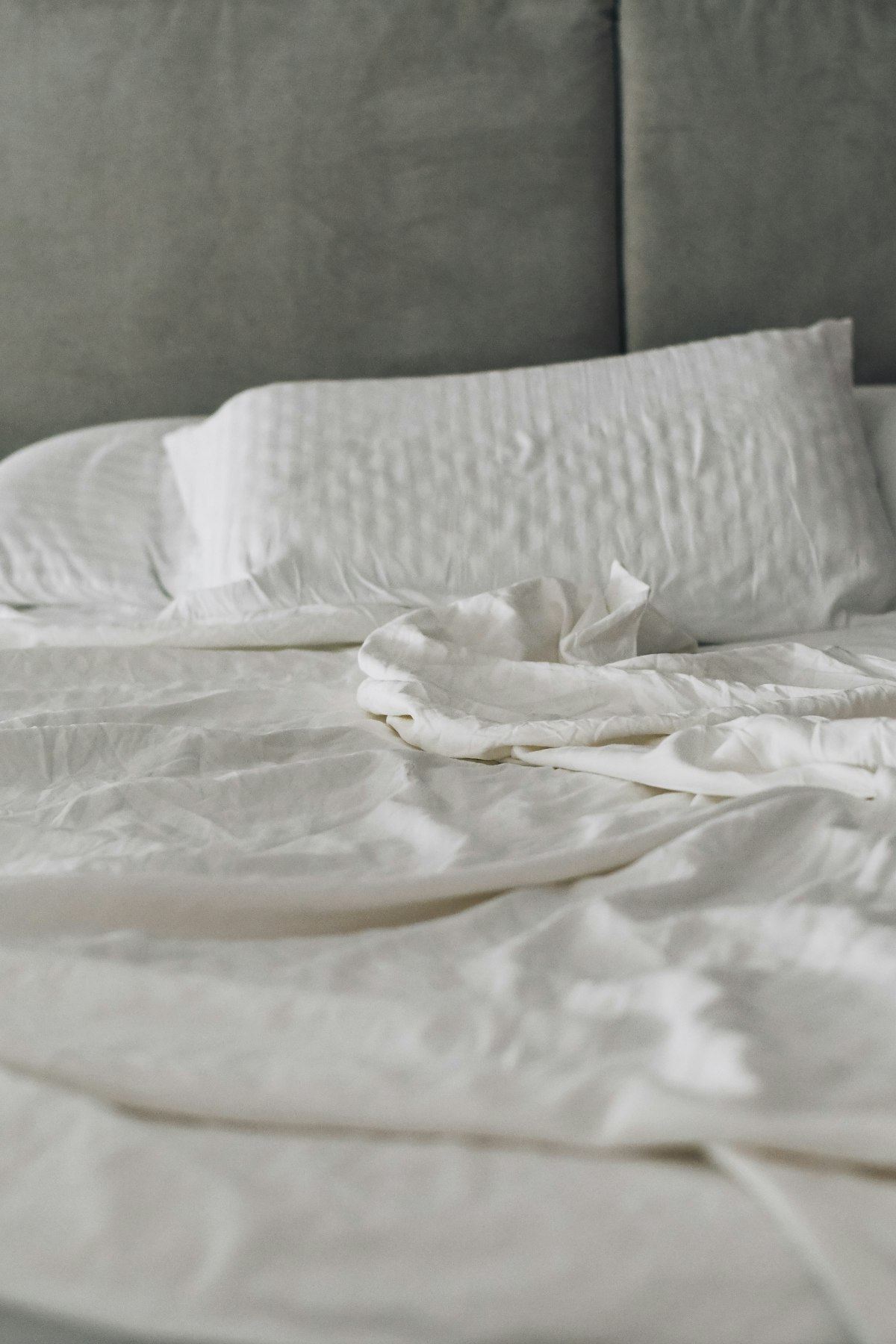
TL;DR: Linen's hollow, irregular flax fibers wick moisture and release heat faster than cotton, so it feels cooler and drier through a hot night; organic cotton percale is the closer runner-up and feels smoother from the first wash, but linen wins on pure summer breathability.
The Fiber Structure Difference That Actually Drives Temperature
Linen comes from the flax plant's stem (a bast fiber), and under a microscope the individual fibers are hollow and irregular, which is exactly what makes linen good at wicking moisture away from skin and releasing it into the air quickly — the fabric equivalent of evaporative cooling. Cotton, a seed fiber, actually absorbs a comparable or greater amount of moisture relative to its weight, but it releases that moisture more slowly. That's the real mechanism behind the common complaint that cotton sheets "feel clammy" on a humid night: the fabric has taken on sweat but hasn't dried out yet, so it sits damp against skin longer than linen does in the same conditions.
Weave adds a second layer to this. Linen is typically woven more loosely than cotton percale, which further helps airflow. Cotton percale, by contrast, is woven tightly for that crisp, smooth hand-feel — which is genuinely pleasant, but it trades away some airflow to get there.
What Weight and Weave Actually Tell You (Not Thread Count)
Linen is conventionally sold by grams per square meter (GSM) rather than thread count. Lighter linen (roughly 120–150 GSM) is the most breathable and best suited to hot climates; midweight linen (170–200 GSM) balances breathability with more durability and drape, and is a reasonable all-season choice.
Cotton is marketed by thread count, and this is where a lot of genuine marketing fluff creeps in. A 200–400 thread count percale weave is breathable and appropriate for hot sleepers. But thread counts marketed well above that — 800, 1000, "luxury" claims — typically require a denser weave or multi-ply yarn tricks to hit the number, and a denser weave means less airflow, not more. A high thread count is a proxy for smoothness and durability, not for coolness, and sateen weaves in particular (glossier, denser) trap more heat than percale even at moderate thread counts. If summer breathability is the actual goal, a lower thread count percale weave will usually outperform a high thread count sateen.
Certifications Worth Actually Checking For
- GOTS (Global Organic Textile Standard) — verifies organic fiber content and restricts processing chemicals throughout manufacturing, for organic cotton specifically.
- OEKO-TEX Standard 100 — tests the finished textile for harmful substances; applies to both cotton and linen and is a useful baseline regardless of fiber choice.
- European Flax / Masters of Linen — certifies flax grown in Western Europe without irrigation or GMO seed, with traceability back to the field.
There's a real environmental case for flax beyond breathability, too. Conventional cotton is one of the more water- and pesticide-intensive crops grown at scale, while flax is largely rain-fed in the temperate regions where it's traditionally grown and requires comparatively little irrigation or pesticide input. If sustainability is part of the decision alongside summer comfort, that's a genuine point in linen's favor — not just a marketing line.
The Real-World Comparison for Summer Sleepers
| Factor | Linen | Organic Cotton Percale |
|---|---|---|
| Moisture handling | Wicks and releases quickly | Absorbs well, dries slower |
| Feel out of the package | Slightly crisp, textured | Smooth immediately |
| Feel after 20+ washes | Noticeably softer, relaxed drape | Fairly stable, softens modestly |
| Wrinkling | Wrinkles readily (part of the look) | Wrinkles less |
| Typical queen set price | $150–$300 (Cultiver, Rough Linen, Quince) | $120–$220 (Coyuchi, Boll & Branch, Quince) |
In genuinely humid summer climates, linen's advantage is most obvious — it's the difference between fabric that clears sweat and fabric that holds onto it. In hot but dry climates, the gap narrows, because cotton has more opportunity to evaporate moisture even though it does so more slowly. Linen also isn't for everyone aesthetically: it wrinkles as a matter of course (that's part of the intended look, not a flaw), and it's typically a bigger upfront investment. Organic cotton percale remains the better pick for anyone who wants a smoother, more traditional sheet feel and doesn't want to deal with linen's rumpled texture.
Caring for Either Without Undoing the Eco Benefit
Wash both in cold water and skip the dryer sheet — cold washing preserves fiber strength (linen and cotton both lose tensile strength faster under repeated hot-water washing) and avoids the energy draw of heating water for laundry. Line-drying, when practical, is gentler on both fibers and is the lowest-impact way to dry either one.
Frequently Asked Questions
Does higher thread count mean cooler cotton sheets?
Not necessarily — and often the opposite. Very high thread counts usually require a denser weave to achieve, and a denser weave reduces airflow. A 200–400 thread count percale weave is generally cooler than an 800+ thread count sateen weave.
Is linen actually cooler than cotton, or is that a myth?
It's real, and it comes down to fiber structure: linen's hollow, irregular flax fibers wick and release moisture faster than cotton's, so it dries out against skin more quickly during a hot, sweaty night.
Which is more sustainable to grow, cotton or flax?
Flax generally has the lighter footprint — it's largely rain-fed in its traditional growing regions and needs comparatively little irrigation or pesticide input, whereas conventional cotton is one of the more water- and pesticide-intensive crops grown at scale. Organic cotton narrows that gap but doesn't erase it entirely.
Does linen bedding get softer over time?
Yes, noticeably — linen relaxes and softens with repeated washing in a way that's more dramatic than cotton percale, which starts smoother but changes less over its lifespan.
What GSM should I look for in linen sheets?
120–150 GSM for the most breathable, lightweight option in hot climates; 170–200 GSM if you want a bit more durability and drape without giving up much breathability.


Reviews & Comments
Loading...