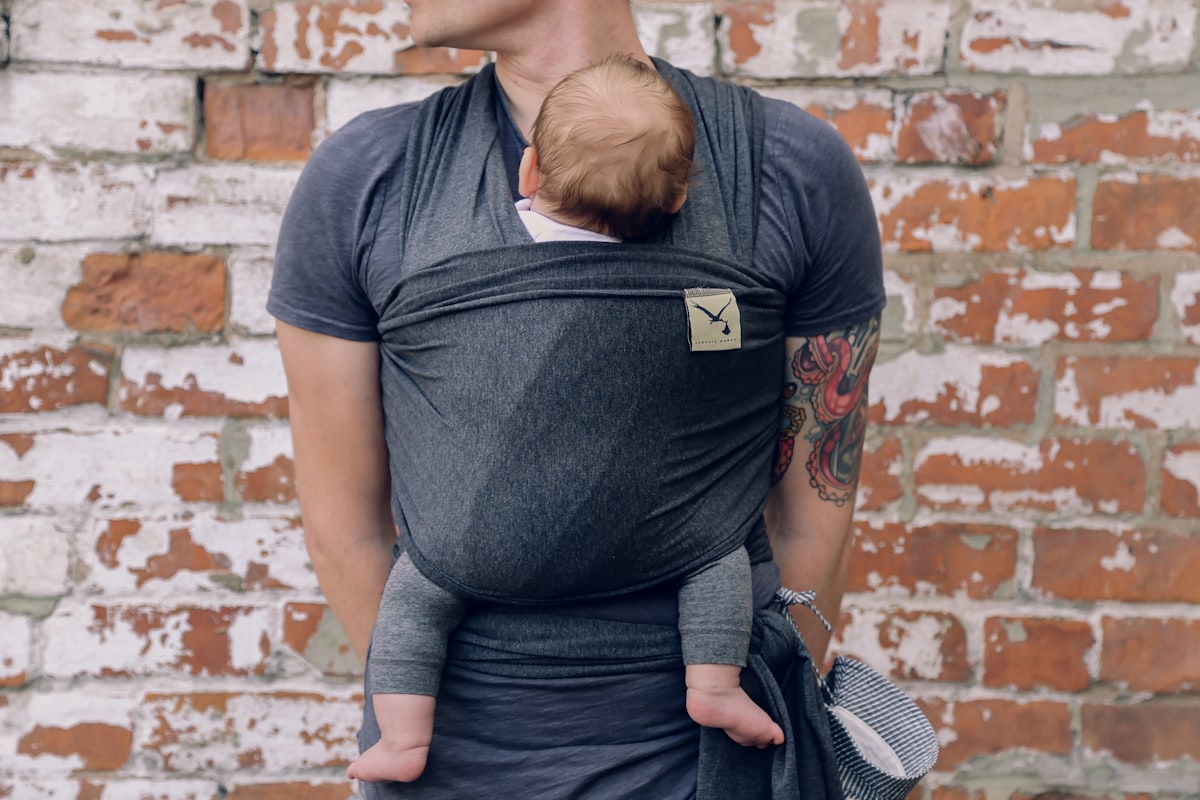
Baby carrier fabric spends hours in direct, sustained contact with a baby's face, hands, and mouth — closer and longer contact than most other textiles in a nursery. That makes fiber shedding a more directly relevant question here than it is for, say, a couch cushion.
What Sheds From Each Material
All fabric sheds some fiber under friction and repeated washing — this is true of both wool and synthetic materials, and neither is literally "shed-free." The relevant difference is what the shed fiber actually is. Wool fiber is a natural protein fiber that biodegrades and isn't part of the microplastic exposure conversation. Synthetic carriers, typically polyester or nylon blends, shed synthetic microfibers that don't biodegrade and fall into the same broad category of microplastic pollution documented in laundry wastewater and, increasingly, in studies of airborne and ingested microplastic exposure.
Why Proximity and Duration Matter Here Specifically
Most discussions of microplastic exposure focus on ingestion (food, water) or general environmental presence. A baby carrier is a less-discussed but genuinely relevant exposure pathway specifically because of sustained face-level proximity — hours of skin and sometimes mouth contact, repeated daily, over months of carrier use. This doesn't mean synthetic carriers are acutely dangerous; it means the cumulative, close-contact nature of carrier use is a reasonable factor to weigh when this is otherwise a close call.
The Practical Tradeoffs
Wool-blend carriers (often wool-cotton) are generally durable and warm but can be pricier and sometimes require more careful washing. Synthetic carriers often have an edge in wet-weather performance, machine-wash convenience, and price. Neither tradeoff is about carrier safety in an acute sense — both material types are widely and safely used.
Verdict
For the specific concern of long-term, close-contact microfiber exposure, natural fiber (wool-blend) carriers are the lower-exposure choice. This is a reasonable factor to weigh, not a reason to consider synthetic carriers unsafe — they remain a widely used, generally fine option, just with a different fiber-shedding profile.
Our pick for this: Wool-Cotton Blend Baby Carrier →



Reviews & Comments
Loading...