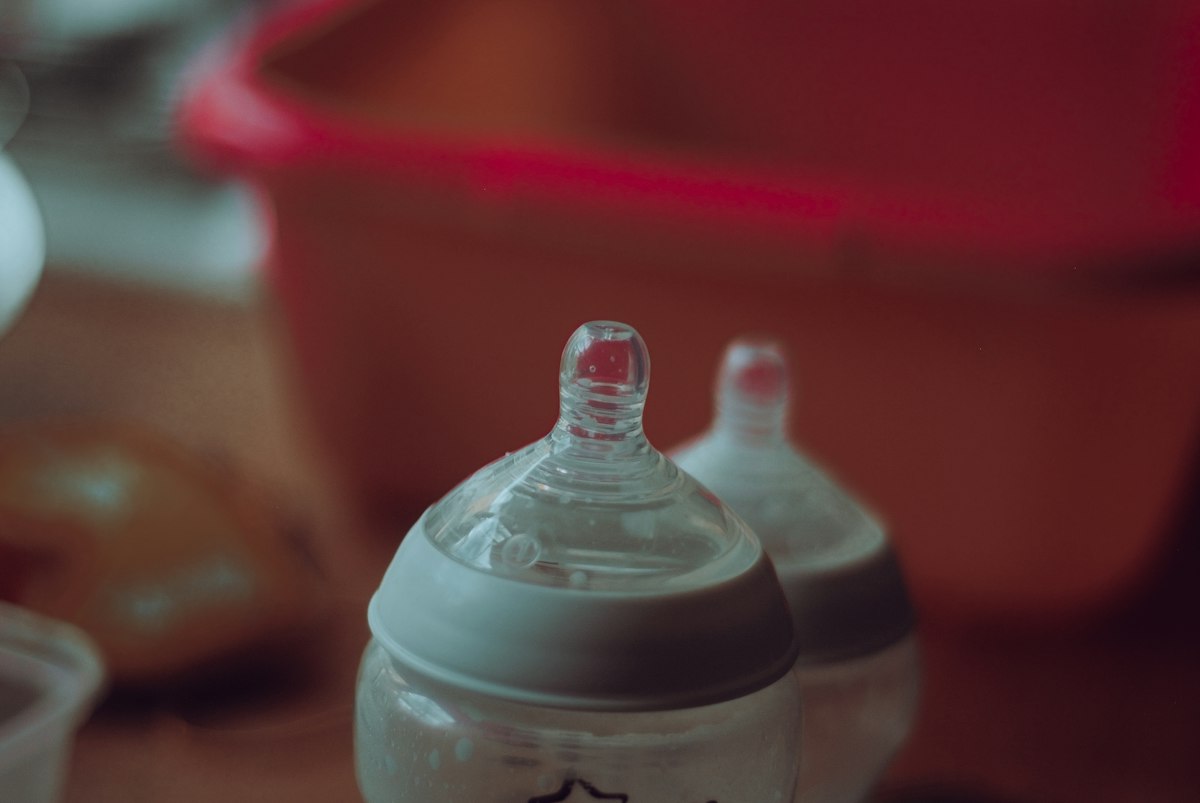
Silicone has become the default "safe" material recommendation for baby feeding gear, largely replacing plastic in the premium end of the category. The microplastic-free claim specifically is worth verifying rather than assuming.
Why Silicone Is Chemically Different From Plastic
Most plastics, including polypropylene commonly used in baby dishes, are carbon-based polymers that can break down over time — through heat cycling, scratching, and UV exposure — shedding microscopic plastic particles in the process. Silicone's backbone structure is built on alternating silicon and oxygen atoms instead, a fundamentally more stable chemical structure that resists this kind of breakdown far better.
Does It Actually Hold Up to Real Use?
Genuine food-grade silicone is rated for a wide temperature range, typically up to 400-450°F, comfortably covering dishwasher cycles and microwave reheating. Under this kind of repeated thermal cycling, food-grade silicone doesn't become brittle or degrade the way plastic does over the same use pattern, which is the mechanism that would otherwise generate microplastic shedding.
The Verification Caveat
The claim holds specifically for genuine, verified food-grade silicone — not all silicone-labeled products are the same. Some budget products blend silicone with filler materials to cut cost, which can change both the safety profile and the durability claims. Checking for explicit FDA food-grade compliance on the packaging, rather than just the word "silicone," is the actual verification step.
Verdict
Genuine food-grade silicone feeding sets are a real microplastic-free upgrade from plastic, and they hold up well to daily dishwasher and microwave use. The claim is legitimate — just confirm the specific product is verified food-grade silicone before assuming a "silicone" label alone guarantees it.
Our pick for this: Food-Grade Silicone Baby Feeding Set →



Reviews & Comments
Loading...