TL;DR: No — not meaningfully. Modern landfills are compacted and covered daily specifically to limit oxygen and moisture, so "biodegradable" trash bags rarely break down any faster there than ordinary plastic. The biodegradable claim is generally only true in an industrial composting facility, which landfill-bound trash never reaches.
What "Biodegradable" Actually Requires — and Why Landfills Don't Provide It
Biodegradable trash bags are usually made from plant-based plastics like PLA (polylactic acid, derived from corn starch) or conventional plastic blended with additives designed to speed up breakdown. Both approaches share the same dependency: they need specific conditions to actually decompose — heat (commercial composting facilities run around 140°F), consistent moisture, oxygen, and exposure to the right microorganisms. The industry standard for this, ASTM D6400, certifies that a plastic will biodegrade under those industrial composting conditions within roughly 180 days. It says nothing about what happens to that same bag in a landfill.
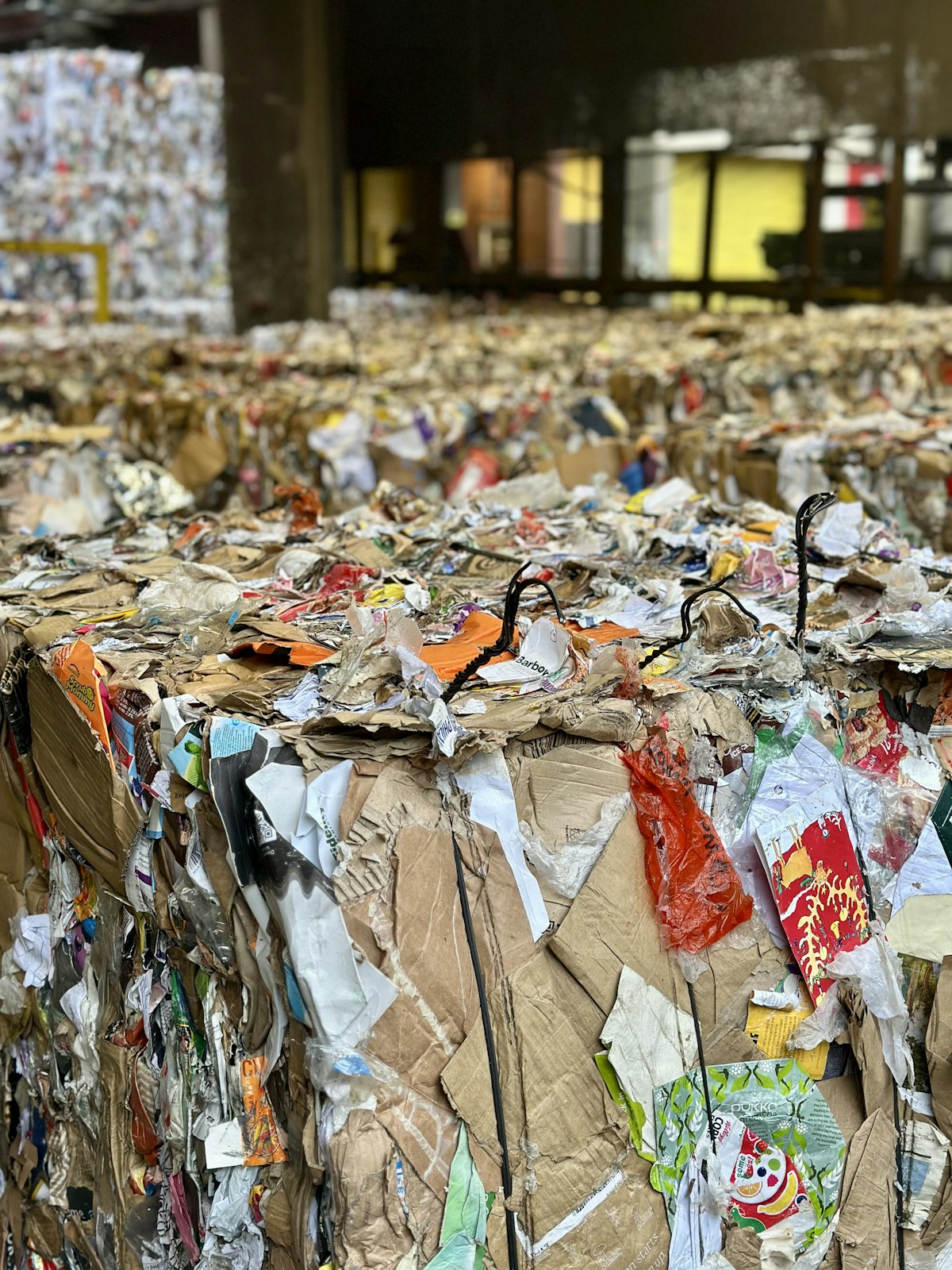
A landfill is engineered to do almost the opposite of what composting does. Waste gets compacted under its own weight and covered with soil or synthetic caps daily to control odor, pests, and stormwater runoff. That compaction squeezes out oxygen, and the daily cover blocks the moisture cycling that composting relies on. The result is an anaerobic environment — one famously documented by the University of Arizona's long-running "Garbage Project," which excavated decades-old landfill cells and found newspapers from the 1950s still legible and hot dogs still recognizable. Landfills don't break things down; in a real sense, they mummify them.
"Biodegradable" vs. "Compostable" vs. "Oxo-Degradable" — These Are Not the Same Claim
- Compostable means a product is certified (ASTM D6400 or similar) to fully break down into non-toxic components in an industrial composting facility. This is the most specific and testable claim — but it only applies if the bag actually gets sent to a composting facility, not the regular trash.
- Biodegradable is a much looser, largely unregulated claim. It doesn't specify a timeframe or an environment, which is exactly why the FTC's Green Guides have flagged unqualified "biodegradable" labeling as potentially deceptive when a product is realistically going to end up in a landfill where it won't degrade in any "reasonably short period" — the standard the FTC applies. The agency has brought enforcement actions against manufacturers for exactly this kind of unqualified claim.
- Oxo-degradable is a different technology entirely: conventional plastic with a metal additive that causes it to fragment into smaller pieces when exposed to UV light and oxygen. It does not biodegrade in any meaningful sense — it just breaks into microplastics faster. The EU's Single-Use Plastics Directive specifically restricts oxo-degradable plastic products because of this, since fragmenting into microplastic is arguably worse than staying intact.
The Anaerobic Decomposition That Does Happen Isn't Necessarily Good News
Some organic material in a landfill does break down anaerobically over long timescales, but that process produces methane — a greenhouse gas with far more short-term warming potential than CO2. The EPA identifies municipal landfills as one of the largest human-generated sources of methane emissions in the US. Ironically, a trash bag that did somehow biodegrade faster in a landfill would be contributing more methane, not solving an environmental problem — the "eco" outcome and the "biodegrades quickly" outcome aren't actually aligned once you're talking about an anaerobic environment.
"Industrial Compostable" and "Home Compostable" Aren't the Same Certification
Even within the compostable category, there's a distinction worth knowing. ASTM D6400 (the US standard) and the similar EN 13432 (used in Europe) both certify a plastic will break down in an industrial composting facility — high, consistent heat, turned regularly, monitored moisture. A separate, harder-to-earn certification (in Europe, "OK Compost HOME"; equivalent home-compostable claims exist from a few US certifiers) verifies a product will actually break down in a backyard compost bin, which runs cooler and less consistently than an industrial facility. A bag certified only for industrial composting will typically not fully break down in a backyard bin within a normal timeframe, so if you're composting at home rather than through a municipal program, the industrial certification alone doesn't tell you what you need to know.
What Actually Reduces Your Trash Bag's Footprint
- Recycled-content plastic bags (look for post-consumer recycled HDPE or LDPE content on the label) have a genuinely lower manufacturing footprint than virgin plastic, biodegradable or not, and they behave predictably — no false expectation about landfill breakdown.
- Certified compostable bags only make sense if you compost. If your municipality offers curbside organics/compost collection, a BPI-certified compostable bag for food scraps is doing exactly the job it's designed for. Using the same bag for general household trash headed to a landfill wastes the premium you paid for the certification.
- Use less bag, not a "greener" bag. Right-sizing bag capacity to your actual trash volume (rather than always grabbing the large kitchen bag) cuts material use more reliably than switching plastic formulations.
- Check for BPI or ASTM D6400 certification specifically — not just the word "biodegradable" on the box, which carries no enforceable testing standard behind it.
How to Actually Read the Label Before You Buy
- "Biodegradable" alone, with no certifying body named, is the weakest claim on a package — treat it as marketing until proven otherwise.
- A logo plus a certifier's name (BPI, ASTM D6400, EN 13432, OK Compost) means the claim was independently tested against a specific standard, which is a meaningfully different level of evidence than a word on a bag.
- "Recyclable" and "made with recycled content" are different claims from biodegradable entirely, and for a bag that's genuinely landfill-bound, recycled content is usually the more honest lower-footprint choice.
The Bottom Line
If a trash bag is going into a standard curbside bin and then a landfill, "biodegradable" on the packaging is essentially a marketing claim rather than an environmental outcome. The bag will behave almost exactly like conventional plastic once it's compacted and buried. The only place the claim holds up is an industrial composting facility — which is a different waste stream entirely, and one your regular household garbage almost certainly never reaches.



Reviews & Comments
Loading...