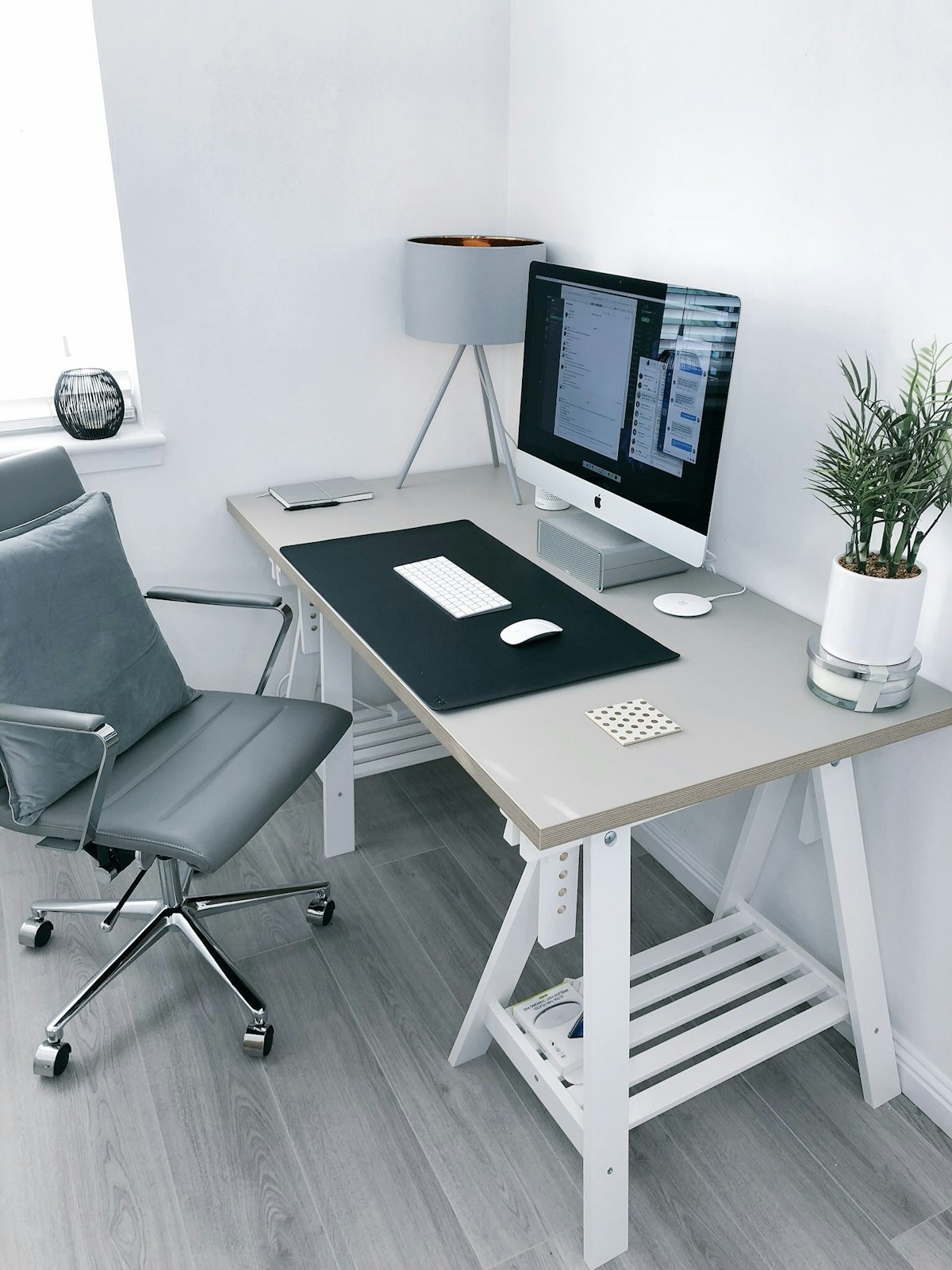
Search "ergonomic home office" and the results are almost entirely product roundups. That's a little backwards — most of what actually causes neck, back, and wrist strain at a desk is positioning, not equipment, and positioning is free to fix.
Fix Your Monitor Height First
If you're working from a laptop propped flat on a desk, you're probably looking down at a 20-30 degree angle for hours at a stretch, which is one of the most common sources of neck strain in home setups. A stack of books under a laptop, or a monitor, costs nothing and fixes this directly — the goal is having the top of the screen roughly at eye level, so your neck stays close to neutral instead of craned forward and down.
Check Your Elbow Angle
Keyboard and mouse position matters as much as monitor height. If your desk is too high relative to your chair, your shoulders end up hiking up toward your ears to reach the keyboard — a posture that causes shoulder and upper back tension that builds slowly enough that people often don't connect it to their desk setup at all. The fix is adjusting chair height (or adding a cushion) until your elbows sit close to a 90-degree angle with your forearms roughly level with the desk.
Support Your Lower Back
A rolled-up towel or a firm cushion placed in the small of your back, against most standard chairs, provides real lumbar support — the kind that's usually the actual selling point of expensive "ergonomic" office chairs. It's not identical to a chair engineered around this from the start, but it addresses the specific problem (lower back rounding during long sitting stretches) directly and immediately.
Reduce Repeated Reaching and Twisting
Anything you use constantly during the day — water, phone, notebook — is worth keeping within arm's reach rather than requiring a twist or reach to grab. This sounds trivial, but repeated small twisting motions across a full workday add up to real strain, and it's a pure layout fix with zero cost.
Where Buying Something Actually Starts to Matter
None of this replaces a genuinely supportive chair if yours is falling apart, or a height-adjustable desk if you want to alternate between sitting and standing throughout the day. But it's worth doing the free fixes first and being honest about what specific problem remains — a lot of "I need a new chair" turns out to actually be "my monitor is six inches too low," which no chair purchase will fix.


Reviews & Comments
Loading...