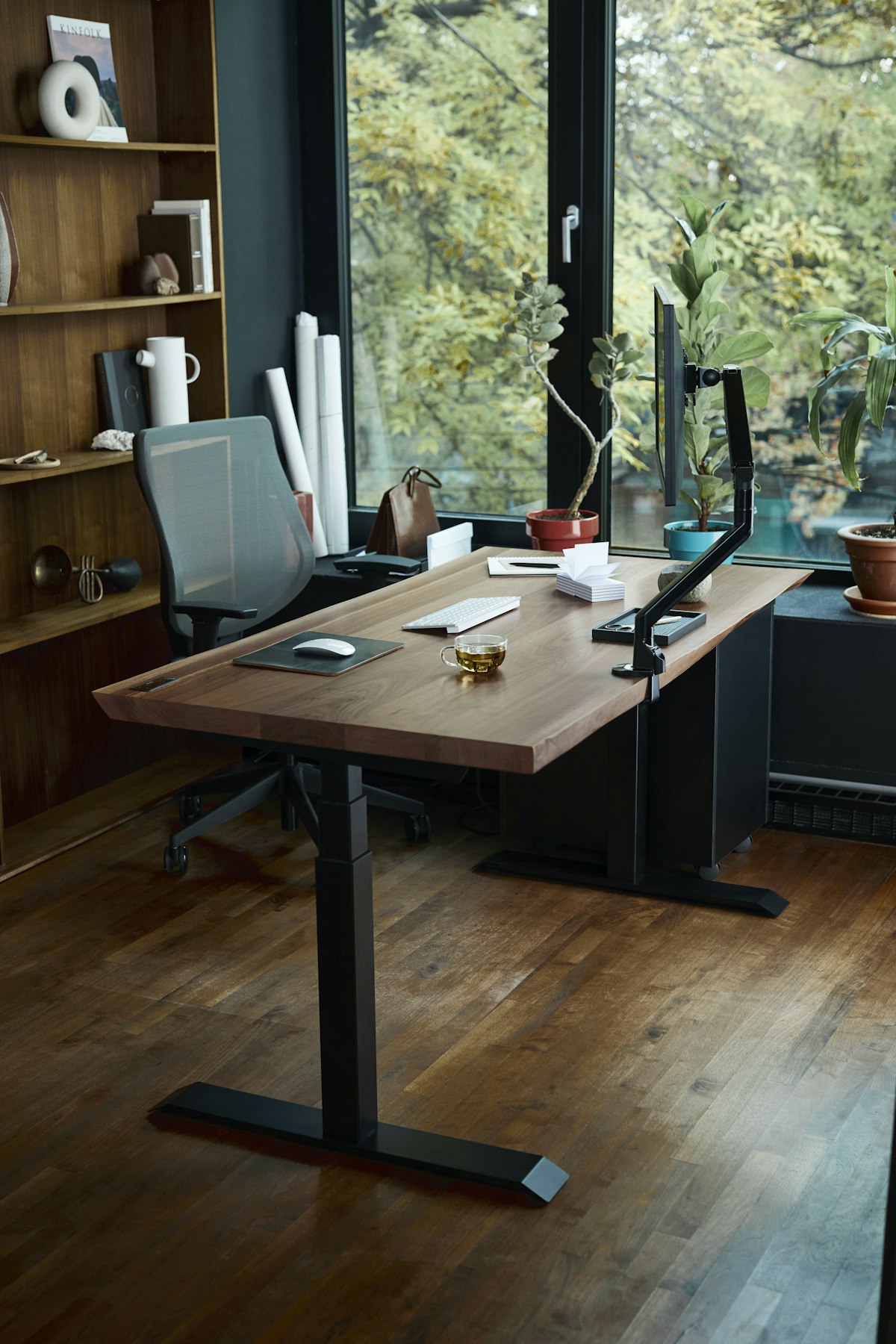
There's a pattern that shows up constantly in sit-stand desk reviews, forum threads, and workplace wellness surveys: someone buys a standing desk solution, uses it constantly for the first few weeks, and then it quietly becomes a permanent monitor shelf. The interesting part isn't that this happens — it's why.
The instinct is to blame motivation. The research points somewhere else.
It's Not About Willpower
Studies on sit-stand behavior consistently point to transition friction as the actual driver of long-term usage, not intent or health awareness. Any added effort in switching from sitting to standing — cranking a manual riser, lifting a converter into place, dealing with cable slack — reduces how often people make the switch over the course of a day. And fewer transitions means the whole point of a sit-stand setup, moving between positions regularly, quietly stops happening.
Why Full Desks Tend to Stick Around Longer
Electric height-adjustable desks can move from sitting to standing height in about 1-2 seconds with a single button press. That's a small detail that turns out to matter a lot — when the cost of switching positions drops close to zero, people actually do it throughout the day instead of committing to one position and staying there out of inertia.
There's likely also a psychological piece here that's harder to measure directly: a full desk is a bigger investment, both in money and in the fact that it replaces your entire desk rather than sitting on top of it. That kind of commitment seems to correlate with people actually using what they bought, rather than letting it become another good intention gathering dust.
Converters Aren't Useless — They're Just a Different Bet
A converter is still a reasonable way to test whether standing while working actually works for you, without the cost or commitment of a full desk. If you already know you like standing periodically and just want the cheaper option, a good converter is fine. Where converters tend to underperform is specifically as a long-term habit-change tool — if the goal is "stand for meaningful chunks of most days, indefinitely," the friction problem tends to catch up eventually.
What This Actually Means If You're Choosing Between Them
If budget allows, an electric full-height desk is the better bet for anyone serious about actually using a sit-stand setup for years, not months — the ease of the transition is doing more work than people expect. If you're not sure standing-while-working is for you yet, a converter is a reasonable, lower-cost way to find out, with the honest expectation that it's more likely to end up parked in one position eventually.


Reviews & Comments
Loading...