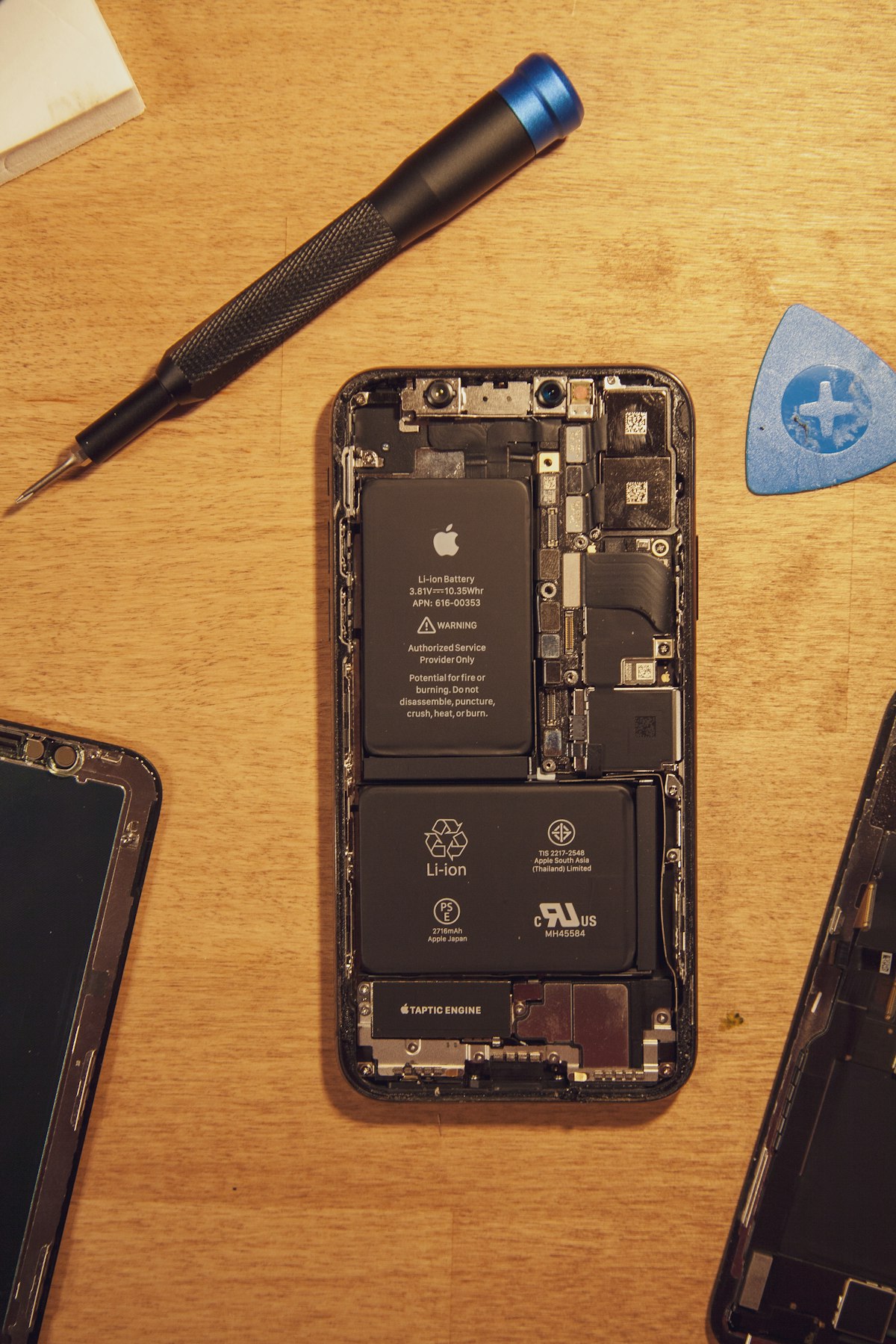
TL;DR: A well-graded refurbished phone from a reputable seller typically has 80%+ battery health disclosed upfront, meaning real-world battery life comparable to a lightly-used phone that's 1–2 years into ownership — not a dramatic downgrade, as long as you check the listed battery health before buying.
How Lithium-Ion Batteries Actually Degrade
Phone batteries degrade in "charge cycles," where one full cycle equals a 0%-to-100% equivalent, whether that happens in one sitting or spread across several partial top-ups throughout a day. Manufacturers publish real degradation targets: Apple states that iPhone batteries are designed to retain up to 80% of their original capacity at 500 complete charge cycles under typical use, and Samsung and most other lithium-ion phone battery specs cite similar ballpark figures in that same neighborhood.
For someone charging roughly once a day, 500 cycles works out to about a year and a half to two years of ownership; heavy users who top up multiple times a day get there faster, light users take longer. That means by year two or three, a phone still running its original, unreplaced battery is commonly sitting around 80–85% of its original capacity. That's a noticeable difference — less buffer for a long day, more likely to need a midday top-up — but it's not the same as a battery that's failing outright.
What "Refurbished" Actually Means for the Battery
Battery grading practices vary a lot by seller, and that variation is the whole ballgame. Reputable refurbishers — Apple's own Certified Refurbished program, Back Market, Gazelle, and Amazon Renewed — test and disclose battery health as a listed spec on every unit, and several explicitly guarantee a floor: Apple replaces any battery testing under 80% health as part of its refurbishment process, and other major resellers commonly advertise the same 80%+ guarantee or a battery swap included in the price.
Less transparent used-phone marketplaces — casual peer-to-peer resale, some unmoderated online listings — often don't test or disclose battery health at all. That's really where buyers get burned, and it's not a problem with "refurbished" as a category so much as a problem with unverified private-party sales being labeled the same way.
Before buying, ask the seller directly for the Battery Health percentage. On iPhone, this is a built-in number under Settings > Battery > Battery Health, and any legitimate refurbisher can and should provide it before you buy, not just at unboxing. On Android, tools like AccuBattery or the manufacturer's own diagnostics give an estimate, though Android's battery-health reporting is less standardized across brands than Apple's single built-in metric.
Real-World Impact by Battery Health Percentage
A rough, honest breakdown of what different battery health numbers actually feel like day to day:
- 90–100% health — essentially indistinguishable from a new phone in daily use.
- 80–89% health — noticeable but manageable; expect maybe an hour or two less screen-on-time by evening for a typical user, though it still gets most people through a full day.
- Below 80% health — this is Apple's own replacement threshold for a reason. Expect visibly faster drain, and possible unexpected shutdowns under peak power demand like cold weather or a demanding app, since an aged battery struggles to deliver current spikes even if its average capacity looks okay on paper.
The Environmental Case, Separate From the Battery Question
Battery health is a performance question; e-waste is a separate, arguably bigger reason refurbished matters. Manufacturing a new phone is disproportionately responsible for that phone's lifetime carbon footprint — mining and refining the rare earth elements, cobalt, and lithium inside it, plus the energy-intensive fabrication of the chips and display, dwarfs the electricity a phone uses over years of charging. Extending a device's usable life, whether by buying it refurbished or keeping your own phone running longer, avoids that manufacturing footprint entirely for as long as the device stays in use. A phone kept in circulation for an extra two to three years through refurbishment also means one fewer unit heading into the e-waste stream, where recovery rates for the rare earth elements and cobalt inside phones remain low globally even where formal recycling programs exist.
This is worth separating clearly from the battery-health discussion above: a refurbished phone with a mediocre 82% battery is still a meaningfully better environmental choice than a new phone with a pristine 100% battery, because the battery gap closes with a $50–100 replacement while the manufacturing footprint of a new device doesn't undo itself.
Is Refurbished Worth It?
Refurbished phones typically sell for 30–50% off retail for a device one or two generations old — a gap that dwarfs the cost of closing any battery health shortfall. A replacement battery, if you ever need one, generally runs $50–100 through an authorized repair channel, which is a minor fix compared to the price difference of buying new.
The bottom line: buying refurbished from a seller that discloses and guarantees battery health — an 80%+ floor, tested and stated up front — means you're very likely getting a phone with battery performance comparable to a lightly used 1–2-year-old device, not a battery that's used up. The real risk in buying used isn't refurbishment itself; it's buying from a seller who won't tell you the battery health number at all, regardless of the price they're asking.
A Quick Buying Checklist
- Get the battery health number in writing before you buy, not just at unboxing — a listing page that states it upfront is a good sign; one that only mentions it after you ask is worth extra scrutiny.
- Check the return window. Reputable refurbishers typically offer 30 days or more; that's enough time to actually verify the stated battery health matches what you received once you've charged the phone through a cycle or two.
- Ask what's covered if the battery underperforms. Apple's program and most major resellers include some form of warranty (commonly 90 days to a year) that covers a battery falling short of the stated grade, not just physical defects.
- Don't chase the absolute lowest price. The cheapest listing in a search is disproportionately likely to be an undisclosed, ungraded private sale rather than a true refurbished unit — the savings on paper can evaporate the first time you need a battery replacement you didn't budget for.
Reviews & Comments
Loading...